

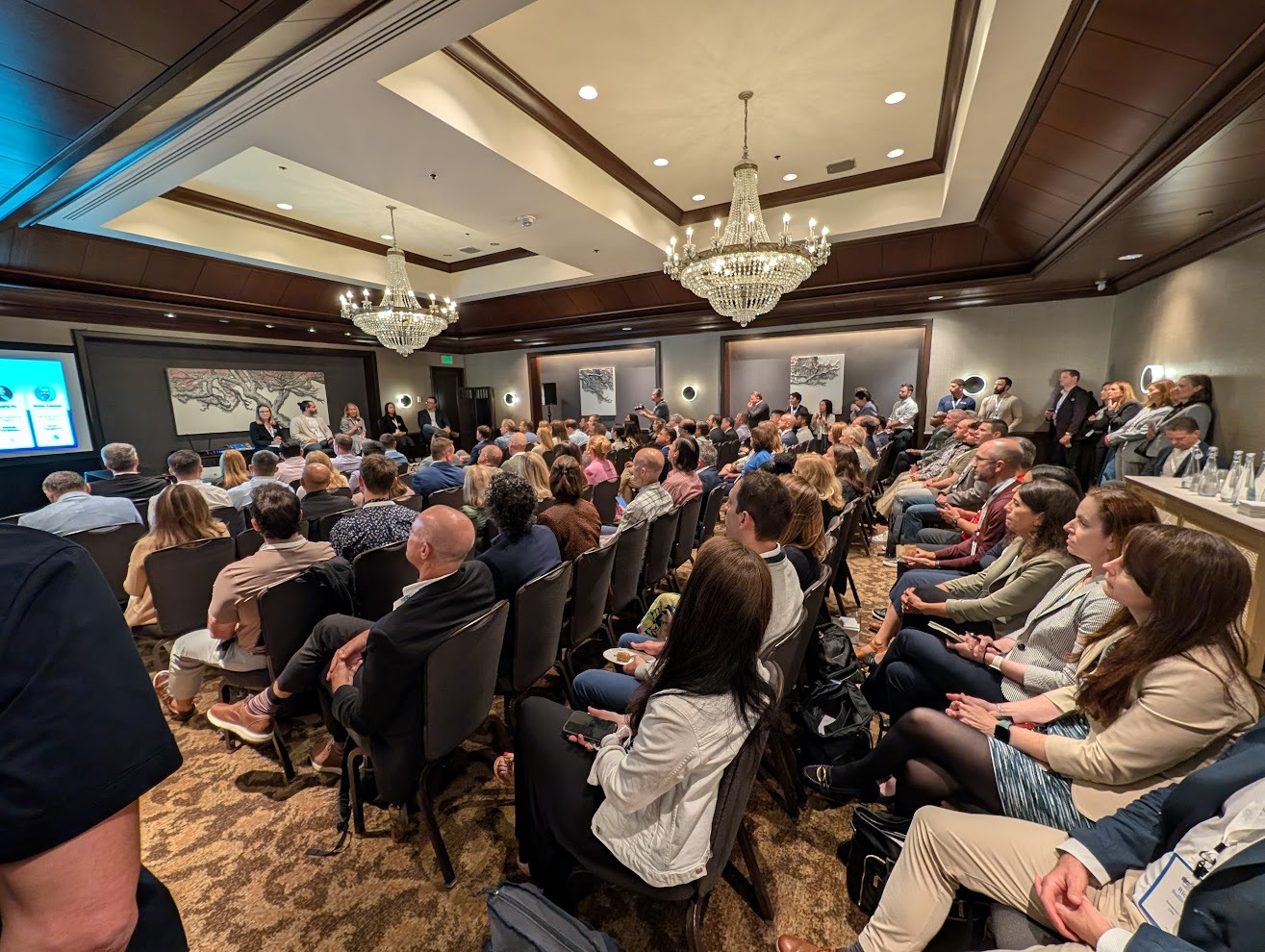
We recently returned from ABFO's National Conference in Philadelphia, where Condor was a proud sponsor and I had the privilege of hosting a panel on how to successfully implement and scale AI in clinical finance. I was joined by Phil Howard, Partner and Integrated Finance Managed Service Leader at EY; Allison Richards, Executive Director of FP&A at BridgeBio; Haiyang Hu, Senior Director of Finance at Addition Therapeutics; and Bobby Fuhrman, Executive Director of Finance at Atrium Therapeutics.
I want to start with a huge thank you to everyone who attended. We had standing room only. Clearly, AI is top of mind for the ABFO community right now.
I wanted to share the slides from our presentation along with a few key takeaways from the session — and from the conversations I had throughout the week. If you’re curious to learn more, join us for our webinar on June 16 from 10-11 am PT. We’ll go deeper on my slides from the session, and discuss where AI is and where it’s heading, how to balance innovation speed with the controls CFOs and auditors expect, and what the highest leverage teams are doing with AI right now.
The single biggest thing I heard — from the stage, in the hallways, at dinner — was this: I know we need to be doing something with AI. I just don't know what, or how, or who to call first.
One attendee raised his hand during our session and said his entire accounting team was asking for AI licenses and he didn't know where to begin. He's not alone. There's no blueprint yet. And that vacuum is exactly what we want to help fill.
During our panel, we walked through three levels of AI use case maturity:
When I asked the room how many people were operating at Level 3, nearly no one raised their hand - understandably. The vast majority are still in Levels 1 and trying to figure out how to tackle Level 2.
The other thing I heard a lot was fear. Not paralyzing fear, but a healthy, motivating anxiety: Am I going to get replaced by this?
I want to be direct: I don't think AI will replace your job. But I do think people who know how to use AI will replace people who don't.
That's not a threat. It's a pattern we've seen play out with every transformational technology. The people who leaned into the change, got curious, and built new skills came out ahead. The ones who waited to be forced into it scrambled to catch up.
Here's how I think about it: one of the core beliefs we shared during our panel is that you can delegate tasks, but you cannot delegate judgment. AI can automate the work — reconciliations, forecasts, accrual support, variance analysis, reporting. But it can’t own accountability. It cannot read the room in a board meeting. It cannot make the call that requires knowing your company's risk tolerance, your pipeline's strategic priorities, or the relationship dynamics with your CRO.
The highest-leverage finance teams will use AI to get the manual work off their plates faster, and then spend more of their time doing the things only humans can do. That's not a smaller role. That's a bigger one.
If your organization hasn't started yet, start now. Buy the license. Let people experiment. The only way to build comfort with AI is to actually use it.
At Condor, we believe part of our job is to help the broader R&D finance community navigate this transition. So we're building out a series of resources to help you move from "I need to figure out AI" to "I know exactly what to do next."
Here is the presentation we shared during our ABFO panel:
We've already published:
Coming up next: a more tactical post on how to actually get started with AI in your finance function, including the specific steps, the right sequence, and how to build momentum inside your organization.
If you were at ABFO and we connected — thank you! If you have questions about any of this, or want to talk through where your organization is on the AI maturity curve, I'd love to hear from you.


